
Network on Humanitarian Action
International Association of Universities
Network on Humanitarian Action
International Association of Universities
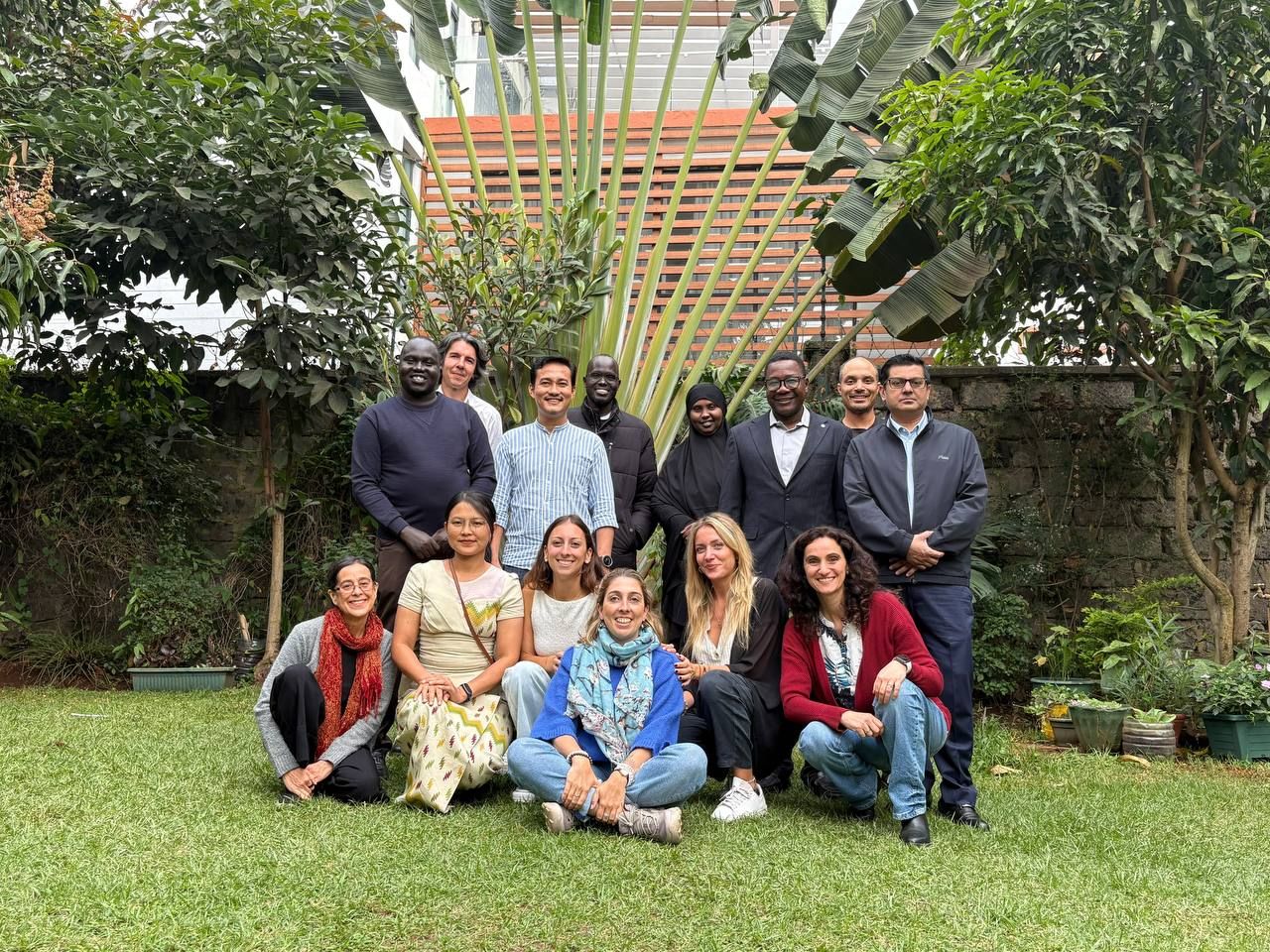
From 7–11 September 2026, NOHA held a five-day advanced training in Humanitarian Mediation in Nairobi, Kenya. The training brought together 13 humanitarian practitioners and professionals working in conflict-affected contexts all over the world to strengthen their practical skills in mediation and dialogue facilitation, with a focus on improving civilian protection and humanitarian access. The training formed part of the Consortium for Civilian Safety and Security, a collaboration between NOHA, ODI Global and Nonviolent Peaceforce, supported by the Belgian Ministry of Foreign Affairs. The consortium's training programme explores practical strategies and interventions to reduce threats of violence against civilians affected by conflict.
Using humanitarian mediation to protect civilians
The Nairobi training explored how humanitarian mediation can contribute to addressing protection challenges by facilitating communication and dialogue between parties to conflict, communities and other relevant stakeholders.
Participants examined how mediation and dialogue facilitation can be used to prevent and mitigate violence, address tensions and create conditions for improved humanitarian access and civilian protection.
The training focused on how humanitarian mediation can contribute to:
A central theme was the role of humanitarian actors as neutral third parties and how the principles of humanitarian action relate to mediation. Participants explored the opportunities and challenges involved in facilitating dialogue while maintaining neutrality and impartiality.
Learning through mediation and simulation
A central feature of the training was its practical and experiential approach. Around 70% of the programme was dedicated to participatory activities, skills-based exercises and role plays, allowing participants to practise mediation techniques and receive feedback throughout the course.
The training began with an examination of the protection of civilians, followed by an introduction to the origins, objectives and specificities of humanitarian mediation. Participants explored the ten steps and ten principles of humanitarian mediation, as well as the origins and different layers of conflict.
Building on these foundations, participants worked with conflict analysis tools and developed interpersonal communication skills through practical exercises. Particular attention was given to pre-mediation, including the role of separate meetings with conflicting parties in preparing the ground for a mediation process.
Through mediation simulations and role plays, participants had opportunities to apply these concepts in practice, navigate challenging interactions and explore how to facilitate constructive dialogue between parties.
From mediation to dialogue facilitation
The second half of the training placed particular emphasis on the practical application of mediation and group facilitation skills.
Participants examined the challenges of neutrality and impartiality in humanitarian mediation and explored how these principles can be maintained when engaging with different parties in conflict-affected environments.
Building on the mediation exercises, the programme introduced group facilitation techniques and provided opportunities to practise facilitating dialogue through extended role plays. Additional listening exercises helped participants further develop their communication skills, while a final plenary dialogue session brought together the different elements of the training.
The combination of mediation simulations, group facilitation exercises and collective reflection enabled participants to explore how these approaches can support constructive engagement and contribute to improved protection outcomes.
The training was facilitated by Jérôme Grimaud, a humanitarian practitioner and accredited mediator with twenty years of field experience. His expertise spans protection, humanitarian access, negotiation, mediation and dialogue facilitation in a range of conflict settings.
This site uses cookies to enhance user experience and to track usage statistics. For more information, see NOHA’s Data Privacy Policy.