
Network on Humanitarian Action
International Association of Universities
Network on Humanitarian Action
International Association of Universities
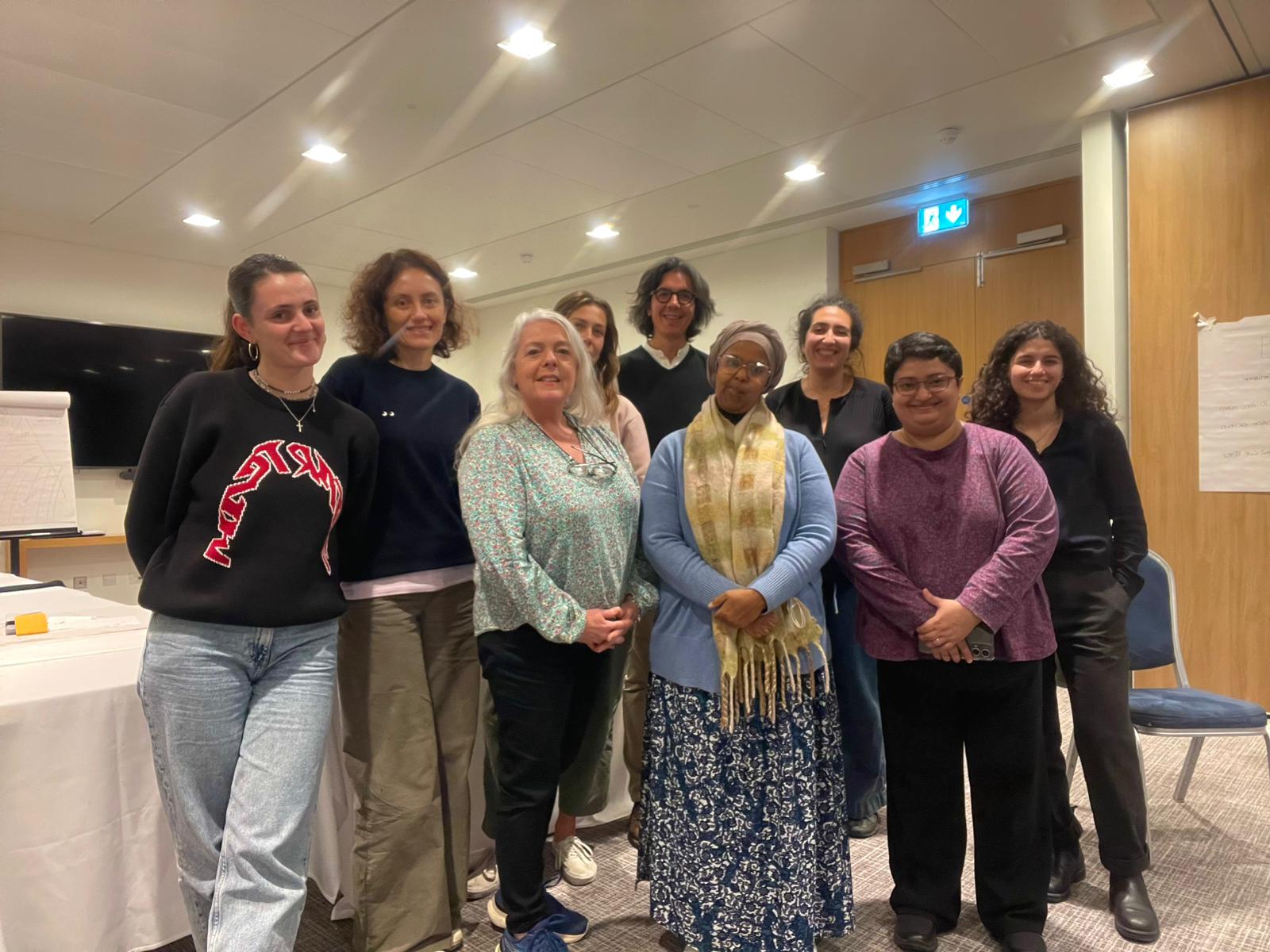
From 3–7 November 2025, NOHA delivered an Advanced Training in Humanitarian Mediation in Dublin, Ireland. Hosted by University College Dublin, the training provided 7 humanitarian practitioners and other professionals with practical tools for using mediation and dialogue facilitation in conflict and humanitarian settings. The training was part of the Consortium for Civilian Safety and Security, a collaboration between NOHA, ODI and NORCAP, supported by the Belgian Ministry of Foreign Affairs. It formed part of a wider programme examining practical ways to reduce threats to civilians and strengthen protection in situations affected by armed conflict.
Exploring mediation as a protection tool
Humanitarian actors frequently negotiate with authorities, armed groups and other stakeholders to secure access and deliver assistance. The Dublin training looked beyond these more familiar forms of humanitarian negotiation to explore how mediation and facilitated dialogue can themselves contribute to reducing violence and improving protection.
Participants examined how a neutral third party can help people or groups in conflict re-establish communication, understand each other's concerns and work towards solutions. The training also considered the relationship between humanitarian principles—including neutrality, impartiality, humanity and independence—and the principles underpinning third-party mediation.
This provided participants with a framework for considering when humanitarian organisations may be well placed to facilitate dialogue, particularly in situations where tensions, mistrust or disagreement are contributing to protection risks or limiting humanitarian access.
Developing the skills behind effective mediation
The programme combined conceptual learning with extensive practical exercises. Around 70% of the training was participatory, with participants working through simulations, role plays and skills-based activities rather than relying on conventional lecture-based teaching.
Participants worked on:
The practical focus allowed participants to test these skills against realistic scenarios and receive feedback throughout the training.
From conflict analysis to dialogue
A key element of the training was understanding that effective mediation begins before the conversation itself. Participants explored how careful conflict and stakeholder analysis can help determine whether mediation is appropriate, who should be involved and what conditions may be required for a dialogue process to succeed.
They also considered the limits of humanitarian mediation and the circumstances in which negotiation, mediation or another form of engagement may be more appropriate.
The training connected these skills to a range of humanitarian activities, including community engagement, accountability to affected populations, protection mainstreaming, social cohesion and safe programming.
This site uses cookies to enhance user experience and to track usage statistics. For more information, see NOHA’s Data Privacy Policy.