
Network on Humanitarian Action
International Association of Universities
Network on Humanitarian Action
International Association of Universities
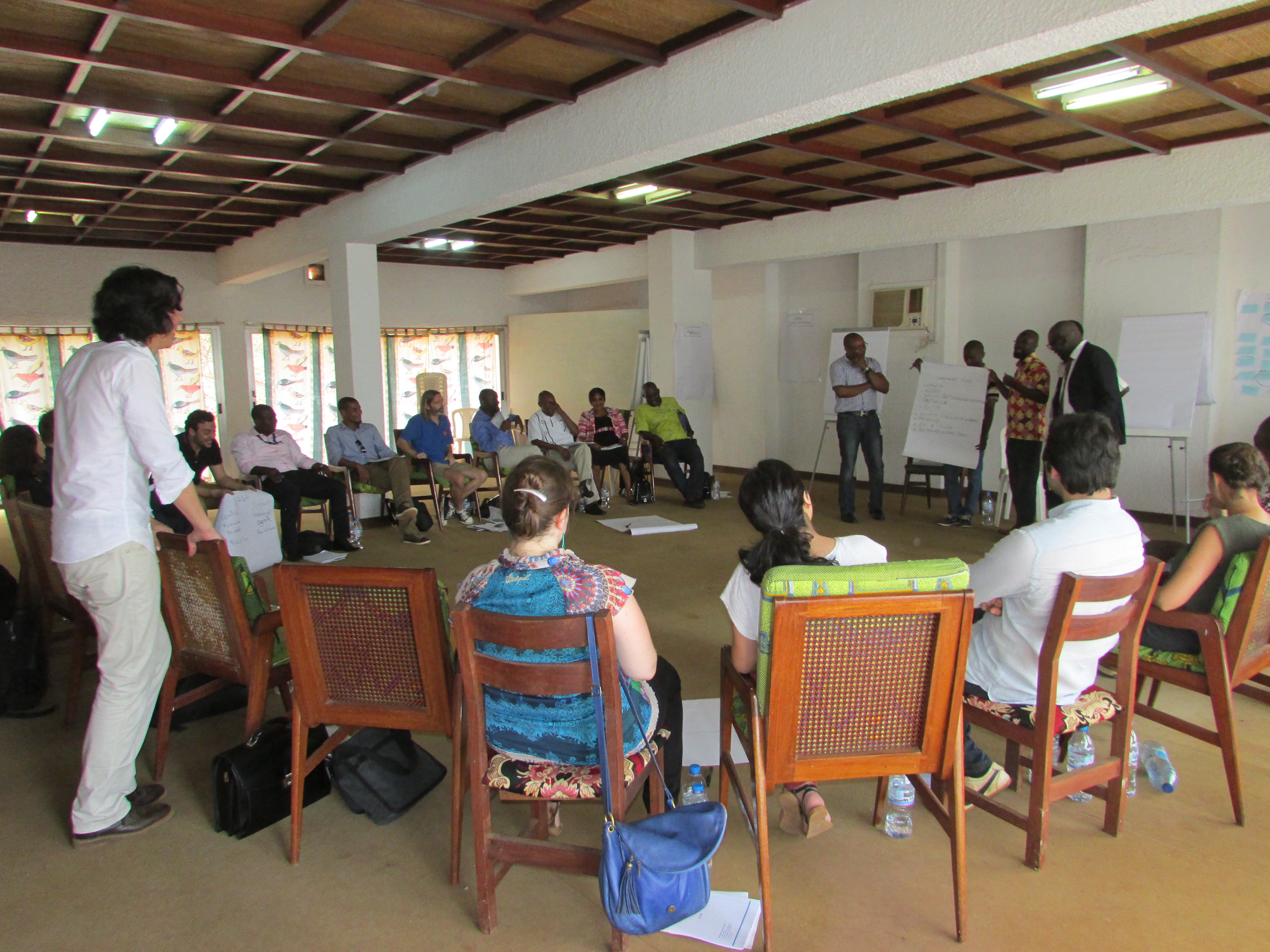
In a global context where protection of civilians is being increasingly threatened and access to most-in-need populations contested, national, and international actors are bound to explore new interventions to meet those challenges: How to reduce violence against civilians, prevent forced displacements, and facilitate returns? How to engage with armed groups, state actors, and communities to increase acceptance and access in high-risk areas? How to prevent and decrease tensions between host and displaced communities in conflict contexts?
COURSE SUMMARY:
This training is part of the work of the Consortium for Civilian Safety and Security gathering the Network on Humanitarian Action (NOHA), the ODI Global’s Humanitarian Policy Group and led by Nonviolent Peaceforce. The consortium has been supported for the last two years support of the Belgian Ministry of Foreign Affairs.
This training will be one in a series of trainings aimed at exploring and training on strategies and interventions to reduce threats of violence to civilians in conflict settings. Learn more about the consortium here.
The aim of the humanitarian negotiations for protection course is to provide humanitarian aid workers, frontline workers and peacemakers working in conflict and humanitarian contexts with practical knowledge, tools and skills to design, plan, and conduct negotiations with the objective of strengthening civilian safety and security and reducing violence, including:
The processes presented during the training will also be useful for personnel involved in protection mainstreaming and safe programming activities such as:
Mode of delivery:
Course length:
Dates and location: 17th to the 21st of August in Chiang Mai, Thailand
Award received:
NOHA Certificate
Audience:
Civil personnel for the Department of Peace Keeping Operations (DPKO) involved in protection of civilians and civil affairs are also encouraged to apply.
Language of Instruction:
English
OVERVIEW:
Protection and Access
Protection of civilians is the the most pressing challenges of current humanitarian action. While humanitarian actors are increasingly efficient in providing assistance to people who have been affected by conflict, they are to a much lesser degree active and effective in assisting civilians in pro-actively preventing populations from harm.
Armed violence conducted by governments, non-state armed groups and communities are among the most important challenges humanitarian organisations are facing. Improving protection and access therefore requires engaging with those actors, with the specific aim of reducing the level of violence between and towards civilians, as well as towards humanitarian actors.
While humanitarian organisations are faced with these challenges on a daily basis, they are often not equipped to appropriately address them. By mainly focusing on providing relief and assistance, they have not necessarily developed the tools and capabilities needed to tackle these specific challenges, which include advocacy, negotiation and mediation.
Humanitarian Negotiations and Dialogue for Protection
Over the past years, humanitarian negotiations has become and increasingly discussed aspect of humanitarian work, particularly through the development of new actors working on the professionalisation of humanitarian negotiations. Yet, much of this work and discussion has focused on how negotiations can be and are utilized by humanitarians to address issues around humanitarian access and to delivery of aid and assistance. There is an urge to prioritise protection and explore humanitarian negotiation can be used to protect civilians from threats of violence by engaging with armed actors and other stakeholders to reduce protection risks... As the capacity to engage and use humanitarian negotiations becomes a critical pillar of humanitarian action, the ability of humanitarians to use this skill set to protect those most vulnerable, instead of only or mainly facilitate their own work, should become central to humanitarian intervention.
ORGANISERS:
The NOHA Network on Humanitarian Action is an international association of universities that aims to enhance professionalism in the humanitarian sector, by promoting humanitarian values and providing certificated high-level courses.
This course is part of the work of the Consortium for Civilian Safety and Security, consisting of NOHA, ODI Global, and Nonviolent Peaceforce, supported by Belgian Ministry of Foreign Affairs.
Training Facilitator: Jérôme Grimaud is a humanitarian worker and an accredited mediator with twenty years of field experience. He devoted his first missions to protective accompaniment in Central America and to frontline negotiations in the Middle East before becoming a delegate of the International Movement of Red Cross and Red Crescent Societies. He gradually specialized in the field of protection, conflict sensitivity, humanitarian access as well as humanitarian negotiation, mediation and dialogue facilitation, both as a practitioner and a trainer. His humanitarian negotiation and mediation experiences range from negotiating access of medical agencies and civilians at check points in the Palestinian Territories to facilitating humanitarian mediation processes in the Central African Republic. For six years he has developed and piloted third party neutral humanitarian negotiation and mediation initiatives aiming at improving protection of civilians and humanitarian access for various NGOs, the UN Office for the Coordination of Humanitarian Affairs (OCHA) and the Red Cross. He led the Norwegian Refugee Council global humanitarian negotiations and mediation program for three years and was one of the Centre of Competences on Humanitarian Negotiations (CCHN)’s facilitators. Jerome recently served with OCHA as Civil-Military Coordination Officer and for the World Food Program in Gaza as Head of the Access and Humanitarian Negotiations Unit. He was also involved in MSF negotiations in and for Gaza as Emergency Coordinator and Deputy Head of Mission. Since 2019, Jerome Grimaud is a Senior Protection Advisor in NRC/OCHA Stand By Protection Capacity Project (ProCap) roster. When not on mission, Jerome provides training for various universities of the Network on Humanitarian Action, Louvain-la-Neuve as well as at the Durham University.
TRAINING CONTENT:
The module programme progresses from general to specific topics:
TRAINING OUTCOMES:
Participants will learn to apply the theoretical know how and practical tools provided in the course and practice through negotiation-based simulation scenarios.
As the outcome of the training, participants will be able to:
TRAINING ASSESSMENT AND EVALUATION:
The assessment pattern reflects the training’s learning outcomes and is intended to demonstrate that participants possess the skills and knowledge required in practice.
Knowledge will be assessed through a pre-and post-training test. Participants will also receive feedback and guidance throughout the course which will enable them to make progress and develop their confidence and practical skills.
This site uses cookies to enhance user experience and to track usage statistics. For more information, see NOHA’s Data Privacy Policy.